



1. The Wonder and the Reminder
Over the last five articles, we have dived into the depths of biological engineering. We saw how science identified the “typing error” in the F8 gene, created cellular factories to produce the medicine, and domesticated viruses to deliver the cure. It is an impressive testament to the intelligence that God has granted humanity.
It’s easy to become bedazzled by our own ability. With tools like CRISPR in hand, the temptation to think we have finally mastered life is great.
But there is an ancient story, recorded in the Gospel of Mark (chapter 5), that brings us back to reality. It speaks of a woman who had suffered from chronic bleeding for twelve years. The text says something very timely: she “had suffered much under many physicians, and had spent all that she had, and was no better, but rather grew worse” (Mark 5:26).
The science of the time tried, charged dearly, but failed. True healing only came when she, with simple faith, touched the hem of Jesus’ garment. In an instant, what human medicine could not achieve in years, divine power accomplished.
This is not to diminish science—today, thank God, medicine does much more than it did back then. But it serves to remind us that all our technology, even today’s million-dollar cures, has a limit.
2. Stewardship: The Scientist as Gardener
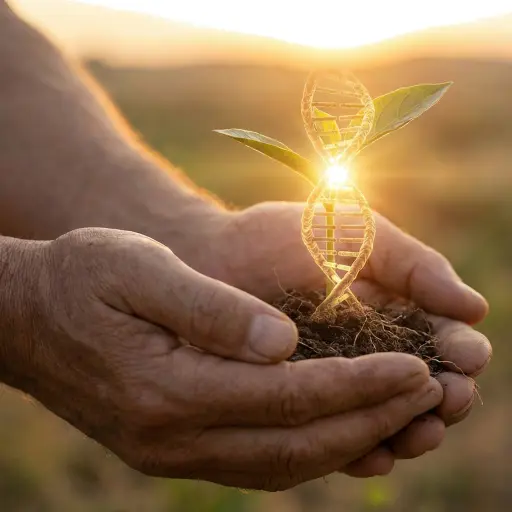
So, how should we view these incredible advances in genetics? The key lies in an ancient word: Stewardship.
In the beginning, in Genesis 2:15, we read that the Creator placed the human being in the garden “to cultivate it and keep it.”
- Cultivate: It means using our intelligence to discover, improve, and heal. When a scientist uses recombinant DNA to prevent a hemophiliac from contracting HIV through plasma, they are “cultivating.” They are using the gift of knowledge to alleviate suffering. This is an act of love and service.
- Keep: It means protecting, respecting limits, and recognizing that the garden is not ours. We did not create DNA; we only learned to read it.
True science is an act of stewardship. It is taking good care of the creation entrusted to us.
3. The Danger of Pride: The Genetic Tower of Babel
Where is the danger? The danger arises when we forget that we are stewards and begin to act as owners.
Intellectual pride is thinking that because we know how to cut a gene, we have the right to rewrite human nature according to our own will, without any ethical or spiritual reference. It is the mentality of the Tower of Babel (Genesis 11): using technology not to serve, but to try to “reach the heavens” by our own means, to be “like gods.”
When science loses humility, it ceases to serve life and begins to serve the ego or unrestrained profit.
4. The Final Cure is a Gift
The journey of hemophilia teaches us that we should celebrate every medical advance as a blessing. We should pray for scientists and support research that alleviates pain.
But, at the end of the day, whether the cure comes through a cutting-edge gene therapy or an inexplicable miracle, the source is the same. Life is a gift. Intelligence is a gift. And true wisdom lies in using these gifts with hands full of skill, but with knees bent in gratitude to the One who granted them.
➡️ Connection to the Technical Series
This reflection stems from our deep analysis of the science of hemophilia. If you wish to understand the technologies that inspired this text, explore our technical series:
Quick links in this series
- Article 1: The Story That Revealed the Error in the Code
- Article 3: The Current Gene Therapy Technology
- Article 5: The Future Genetic ‘Scissors’ (CRISPR)
- You are here -> A Reflection on Healing and Humility
- ⭐ Historical Bonus: The Nobel Saga Behind the Cure
🔗 Inspirational References
- Holy Bible: Gospel of Mark, Chapter 5 (The woman with the issue of blood).
- Holy Bible: Book of Genesis, Chapters 2 and 11 (The garden and the tower).