



The Human Problem: The Limit of Sight
The standard recommendation for patients with diabetes and neuropathy is daily foot inspection. Looking for cuts, blisters, calluses, changes in color or temperature. It’s an essential measure, but fundamentally reactive and dependent on the visual acuity and residual tactile sensitivity of the patient or caregiver. The problem lies in the fact that many pathological processes leading to ulceration, such as subclinical inflammation or tissue stress from abnormal pressure, begin before they are visible or palpable. By the time redness or swelling becomes obvious, the damage may already be advanced. Neuropathy masks early symptoms, creating a dangerous window where the lesion progresses silently.
The Idea (The Thesis): The AI-Powered Portable Diagnostic Scanner
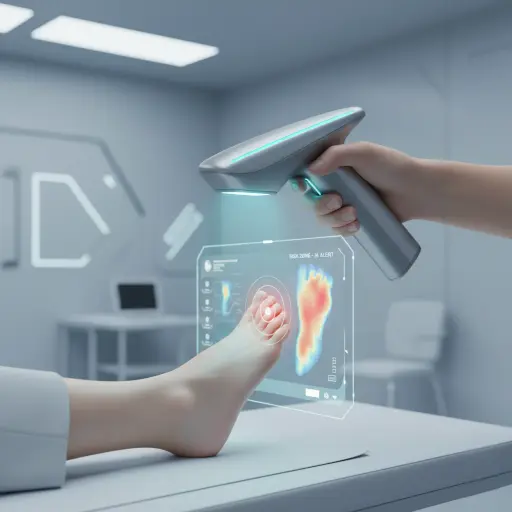
We propose the concept of the “Caregiver’s Scanner”: a portable, handheld device designed for easy use by caregivers, healthcare professionals, or even the patient themselves (if mobile). Its function would be to perform a quick, non-invasive scan of the sole and sides of the feet, capturing data invisible to the naked eye.
Key technologies could include:
- Infrared Thermography: Thermal cameras can detect minimal temperature variations on the skin surface. Areas of inflammation tend to show elevated temperature (“hot spots”), serving as an early indicator of tissue stress or initial infection, often before any visual change. Studies already validate thermography as a screening tool for ulceration risk.
- Pressure Mapping (Optional/Advanced): Pressure sensors could map the distribution of plantar load during stance (or even at rest), identifying areas of excessive pressure that pose a chronic risk.
- Image Analysis (Visual/Spectral): Cameras could capture high-resolution visual images and perhaps use spectral analysis to detect subtle changes in blood perfusion or tissue oxygenation.
Artificial Intelligence would be crucial for processing and interpreting this data:
- Comparative Analysis: Comparing the current scan with the patient’s history, detecting subtle changes over time.
- Pattern Recognition: Identifying thermal or pressure patterns associated with a high risk of ulceration.
- Alert Generation: Clearly indicating areas of concern on a visual map of the foot, perhaps with a risk score, alerting the caregiver to the need for special attention (e.g., pressure relief, medical consultation).
The Technological Horizon and Connections
Portable medical thermography technology already exists, as do plantar pressure analysis systems. The innovation here lies in the integration of these modalities into an accessible, easy-to-use device, and the development of AI algorithms specifically trained for early diagnosis in the context of the diabetic foot and home or primary care settings.
This scanner connects directly to the [Prevent] stage of our ecosystem: while the Smart Sock/Insole offers continuous passive monitoring, the Caregiver’s Scanner provides active, targeted diagnosis, performed periodically.
Future Vision: As mentioned, the scanning technology (thermography, pressure) could be directly integrated into future therapeutic devices, such as the Multiphase Therapeutic Boot . This would allow a complete cycle: diagnosing the foot’s condition before treatment, monitoring the response during therapy, and adjusting the protocol in real-time, all guided by AI.
The Ethical Challenge and Empowering Care
The main challenge is not just technological, but human. How to ensure the device is used correctly? How to interpret the alerts? The tool does not replace clinical judgment but assists it. An intuitive design and training programs for caregivers and patients would be essential. The issue of health data privacy is also central.
The goal is not just to detect, but to empower the caregiver (whether professional or family) with information previously inaccessible, enabling faster and more effective intervention, transforming home care into an intelligent extension of clinical assessment.
Part of the AI Care Ecosystem
This thesis on proactive diagnosis represents the [Diagnose] stage within our AI Care Ecosystem, connecting:
- [Prevent]: The Smart Sock/Insole
- [Restore]: Neural Interfaces and Smart Garments
- [Heal]: The Rapha Device (Context) / The Multiphase Therapeutic Boot (Thesis)
- [Integrate]: Living Technology: The Intelligent Fabric
“To see before it hurts, to care before it wounds. Technology serving the watchful eye.” — Lab of Ideas Reflection, engeAI.com