



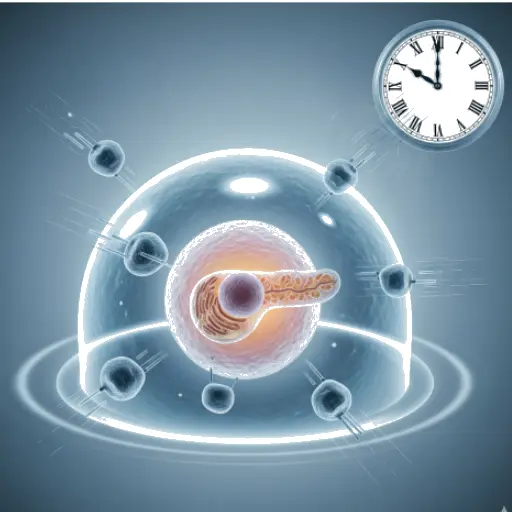
Introduction: The Window of Opportunity
In our previous article, “The Weapon and the Trigger,” we discovered that Type 1 Diabetes (T1D) does not start suddenly. It is the result of a silent “civil war” that can last for years, especially in adults (in the case of LADA). This discovery raises the billion-dollar question: if we know the war is starting, can we do anything to stop it?
For the first time in history, the answer is yes. This article reverse-engineers the first tool science has given us to intervene in this window of opportunity: immunotherapy with Teplizumab.
1. Teplizumab: A Diplomat, Not an Atomic Bomb
To understand how Teplizumab works, think of T1D autoimmunity as an army of “T-cells” that has been given the wrong order to attack the body’s insulin “factories.” Traditional immunosuppression, used in transplants, is like an “atomic bomb”—it destroys the entire army, leaving the body vulnerable.
Teplizumab is different. It is a molecular “diplomat,” an antibody that binds to a specific “antenna” (the CD3 molecule) on the surface of T-cells. In doing so, it does not kill them indiscriminately. It re-educates them:
- Disarms the aggressors: It leads the auto-reactive T-cells into a state of “exhaustion” or self-destruction.
- Promotes the peacemakers: It increases the proportion of “regulatory T-cells,” the “blue helmets” of the immune system.
2. Why Does It Only Delay, and Not Cure?
The study that led to its approval, published in the New England Journal of Medicine1, showed that Teplizumab delayed the onset of clinical T1D by an average of two to three years. A huge victory, but not the cure. Why?
- The War Has Already Begun: When the treatment is administered (at Stage 2), part of the “factory” has already been destroyed. Teplizumab protects what remains, but it does not rebuild what has been lost.
- The Effect is Temporary: The treatment is a single 14-day course. Although its effects last for years, the immune system’s faulty “memory” can eventually train new “soldiers” to restart the attack.
- It Doesn’t Erase the Root Cause: The treatment does not correct the original genetic predisposition that gave the wrong order in the first place.
3. The Real Side Effects (The “Rifle’s Kick”)
Like any powerful tool, Teplizumab has its “kick.” Its effects on the immune system can cause side effects. The most common, reported in clinical trials2, are generally temporary and manageable:
- Decrease in white blood cells (Lymphopenia)
- Rash
- Headache
- More rarely, a stronger reaction called Cytokine Release Syndrome, which can cause fever and muscle pain.
Conclusion: The Engineering of Hope
Teplizumab is not the definitive cure, but it is a landmark in biological engineering. It proves that it is possible to intervene in the “silent war” of T1D. It has shifted the question from “if” we can stop the disease to “how” we can make this “ceasefire” permanent. It is the first and most important step towards a preventive cure.
Quick links in this series
- The Weapon and the Trigger
- Stopping the Internal War (LADA & Teplizumab)
- Lantidra: The Approved Therapy
- VX-880: The Cell Factory
- VX-264: The ‘Invisible’ Cell
- You are here -> The Personal Bio-Insurance
Disclaimer
This content is for educational purposes and does not substitute for medical diagnosis or treatment. The information presented here has been verified based on scientific publications and official data.