



Introduction: The Challenge of the Diabetic Foot and the Promise of Rapha
The diabetic foot represents a significant clinical challenge, often leading to chronic ulcers, infections, and, in severe cases, amputations. The difficulty in healing in this scenario is multifactorial, involving neuropathy, peripheral vascular disease, and immunological changes. In this context, news of a Brazilian innovation emerges: the “Rapha” device, developed by the Biomedical Engineering Group at the University of Brasília (UnB), coordinated by Professor Suélia Rodrigues. The device promises to accelerate wound healing, offering new hope for diabetic patients. But what is the engineering behind this promise? How does Rapha work, and how does it compare to existing therapies on the global stage?
The Technology: Photobiomodulation Integrated with a Latex Biomembrane
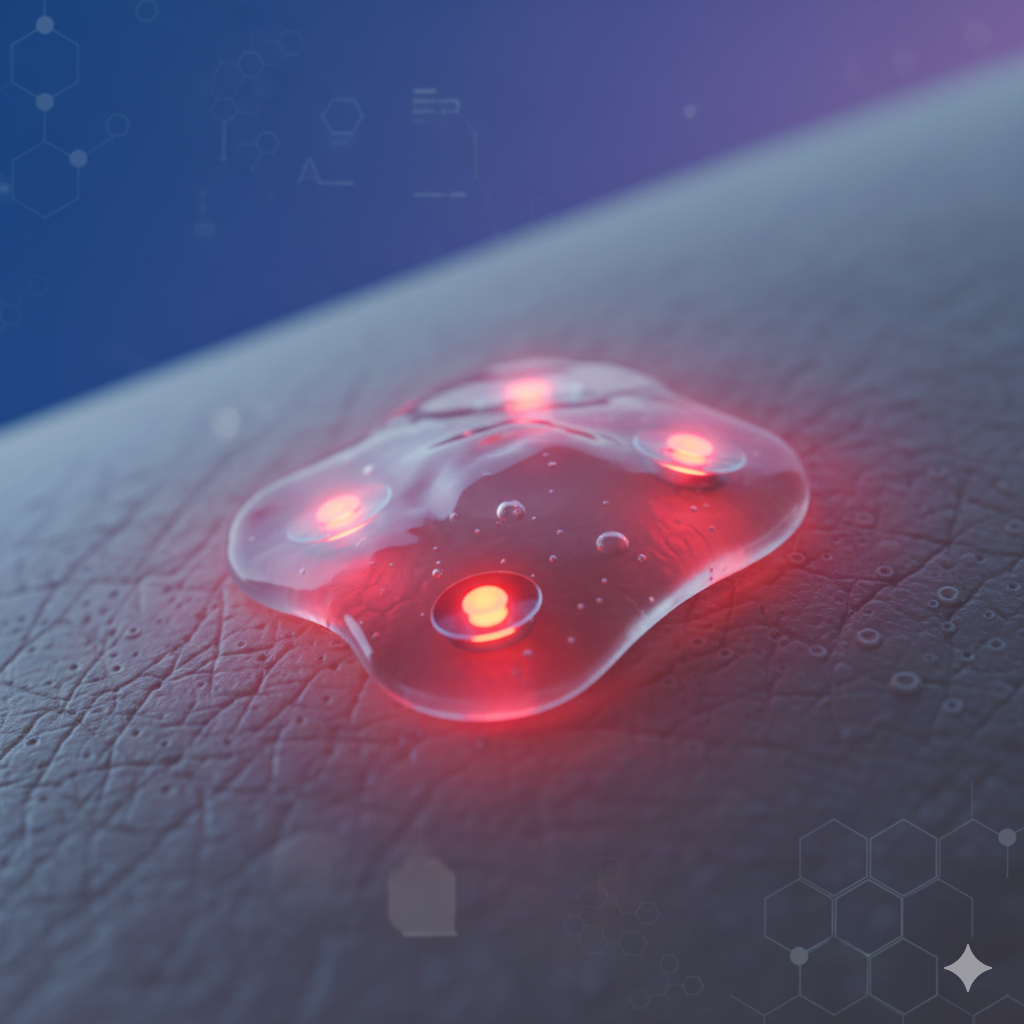
According to available information, Rapha combines two main technologies: photobiomodulation (PBM) using light-emitting diodes (LEDs) and a dressing or adhesive made from a natural latex biomembrane. Photobiomodulation, utilizing light at specific wavelengths (usually red and near-infrared), is a known therapy for its potential biostimulatory effects. These include promoting cell proliferation, modulating inflammation, and increasing microcirculation—crucial factors for wound healing. Studies and systematic reviews, although sometimes showing heterogeneous results depending on the parameters used, indicate benefits of PBM in chronic wounds, including diabetic foot ulcers.
Rapha’s distinguishing feature seems to be the integration of these LEDs into a natural latex matrix (derived from Hevea brasiliensis). Research, including work developed at UnB itself, suggests that latex biomembranes may possess bioactive properties, such as being angiogenic (promoting new blood vessel formation) and anti-inflammatory. Furthermore, they can serve as a vehicle for the controlled release of therapeutic substances, like curcumin or papain encapsulated in liposomes, as mentioned in academic works associated with the group. The combination thus seeks synergy between the effects of light and the properties of the biomaterial. References to a patent application (supposedly BR 1320210019440, to be confirmed at INPI) suggest the originality of this integrated approach.
International Comparison: Where Does Rapha Fit In?
The idea of using PBM for wound healing is not new, and the international market features various LED and laser devices for this purpose (e.g., Photon MD, LiteCure). There are also advanced bioactive dressings (e.g., Integra, Apligraf) that use collagen or cells for tissue regeneration, but without integrated phototherapy. Devices combining light and dressings also exist, such as flexible bandages with LEDs (mentioned in patents like WO2004052238A2 and studies like Science Advances 2022), some using photosensitive gels. Rapha’s differentiation point, therefore, seems to be specifically the use of Brazilian natural latex as a biocompatible and possibly bioactive matrix for PBM delivery, coupled with a design aimed at low cost and accessibility, potentially adapted for public health systems like Brazil’s SUS.
Another therapy often used for diabetic foot is Hyperbaric Oxygen Therapy (HBOT). While effective in selected cases for improving tissue oxygenation, HBOT requires complex infrastructure and sessions in pressurized chambers, differing completely from Rapha’s topical and potentially outpatient approach. Direct efficacy comparison between Rapha and HBOT would require specific clinical trials.
Regulatory Status and Clinical Evidence: What Needs Confirmation
The original news and subsequent reports state that Rapha has a safety seal from INMETRO and is awaiting registration with ANVISA (Brazil’s health regulatory agency). For a complete technical analysis, primary source verification is crucial regarding:
- INMETRO: The certificate number and the exact scope of certification (electrical safety, biocompatibility, etc.).
- ANVISA: The registration protocol number, the device’s risk class, and the current status of the process.
- Clinical Evidence: The publication of peer-reviewed clinical studies detailing Rapha’s safety and efficacy in patients with diabetic foot ulcers, including the number of patients, PBM parameters used (wavelength, dose, time), and results compared to a control group. Public availability of these detailed clinical data is fundamental to assessing the technology’s real impact.
Future Challenges and Connection to Prevention
Assuming proven efficacy and regulatory approval, Rapha’s implementation will face logistical and cost-effectiveness challenges for incorporation into the SUS. Furthermore, patient adherence and healthcare professional training would be necessary.
It is important to note that Rapha focuses on treating the established wound. It fits into a care ecosystem that should ideally include prevention technologies. Concepts like AI-powered sensor socks or insoles capable of early detection of pressure points or temperature/humidity changes represent the other face of biomedical engineering applied to the diabetic foot: preventing the ulcer from forming in the first place. Future integration of treatment devices like Rapha with preventive monitoring systems could represent a significant advance in the holistic management of the condition.
Conclusion (Provisional)
The Rapha device from UnB represents a promising and potentially innovative approach to wound healing in the diabetic foot, combining photobiomodulation with the properties of a Brazilian natural biomaterial. Its relevance is undeniable, especially considering the potential for accessibility within the public health system. However, a definitive technical assessment of its efficacy and safety depends on the detailed publication of robust clinical studies and confirmation of its regulatory status with ANVISA and INMETRO. Monitoring these developments is crucial to determine if Rapha will fulfill the promise of reducing the suffering and risk of amputations associated with this severe diabetes complication.
🔗 References
- [↑] Correio Braziliense: News report on the UnB Rapha device. (Note: Include specific link when found)
- [↑] PCTEC/UnB: Institutional page or fact sheet for the Rapha project. (Note: Include specific link when found)
- [↑] PMC (PubMed Central) / Wiley / Other Databases: Systematic reviews and studies on Photobiomodulation (PBM/LED) and Hyperbaric Oxygen Therapy (HBOT) for diabetic foot ulcers. (Note: Include specific DOIs or PMIDs)
- [↑] UnB Repository / MDPI / PMC: Academic works (theses, articles) from the UnB group on latex biomembranes, liposomes, curcumin/papain, and PBM. (Note: Include specific links or references)
- [↑] Metrópoles / Só Notícia Boa / Others: Additional news reports on Rapha, INMETRO/ANVISA status, and industrial partnership. (Note: Include specific links)
- [↑] Nature Communications / Science Advances / Google Patents: Examples of comparable international technologies (LED patches, bioactive dressings, patents). (Note: Include DOIs or patent numbers)
- [↑] todo_o_conteudo.txt: Internal engeAI.com project file with ideas on prevention (sensor socks/insoles). (Internal reference)
- [↑] INPI / ANVISA / INMETRO: Official databases for patent and regulatory registration confirmation. (Note: Verify and include numbers/protocols)
(Disclaimer: The references above are placeholders based on the draft text. They will need to be replaced with primary sources and specific links during the final curation of the article.)