



1. The News That Warms and Questions
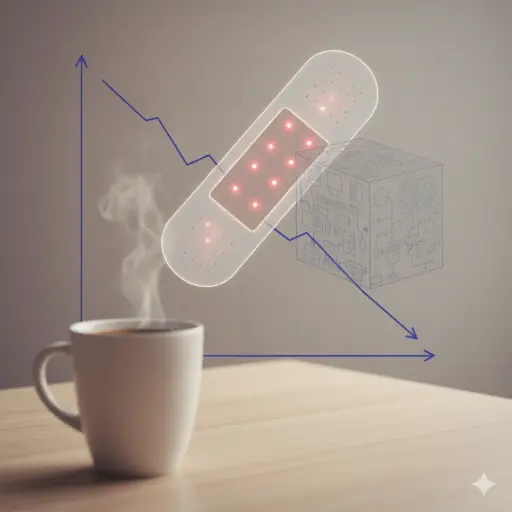
News recently circulated, bringing a breath of genuine hope: Professor Suélia Rodrigues from the University of Brasília (UnB), along with her team, developed a device called “Rapha”. The promise is powerful: accelerating wound healing, especially in the complex scenario of the diabetic foot, helping to prevent amputations. The reaction on social media was a mix of celebration (“Long live science!”, “Long live the Public University!”) and gratitude. And for good reason. The potential to reduce the suffering caused by this diabetes complication is immense.
But beyond the technology itself (whose detailed technical analysis can be found here ), what makes this story particularly relevant for a “coffee table conversation” is what it reveals about the very nature of innovation and its real-world barriers.
2. The Spark of Innovation: When Science is Born from Pain
What drove nearly two decades of research? According to Prof. Suélia herself, it was the “pain of seeing her father suffering from wounds that wouldn’t heal”. She recounts the desire that “other people wouldn’t have to go through that”. This factual information, which serves as the basis for our reflection, was widely reported in the press 1.
This is a vital reminder: the most impactful science often isn’t born from cold equations, but from compassion. It’s born from the keen observation of human suffering and the conviction—almost an act of faith—that a solution can be found. It’s empathy transformed into method, research, prototype. It’s science fulfilling an almost spiritual call to “care for creation,” to alleviate the pain of others.
3. The Valley of Bureaucracy and Real-World Skepticism
The Rapha device, according to the news, has already received the INMETRO safety seal and is awaiting ANVISA registration for large-scale production 1. This is where hope meets the first hurdle, familiar to many researchers and patients: the time and complexity of the regulatory process. One reader commented on the common frustration: “I wanted to know why these discoveries take so long to reach the end-user, that is, the patients”. It’s a fair question. Safety is non-negotiable, but delays can cost limbs and lives.
And there’s a second, perhaps even more complex hurdle, raised by another poignant comment: distrust regarding implementation within the Unified Health System (SUS) itself. The reader shares a personal case where an existing treatment in the SUS (hyperbaric oxygen therapy) was allegedly not offered by the doctor, who insisted on amputation. She raises suspicion of financial interests that might block access to effective and cheaper therapies.
We cannot verify the specifics of this particular account, but it echoes a sentiment present in society: the suspicion that even with a solution available, barriers—be they bureaucratic, financial, or informational—prevent it from reaching those who need it most.
4. The Engineering of Hope and the Reality of Implementation
Rapha is a brilliant example of Brazilian scientific capability, born in the public university. It carries the promise of alleviating immense suffering and reducing costs for the health system. But its full story will only be written when it effectively reaches hospitals and health clinics, and is used ethically and accessibly.
The journey of innovation doesn’t end in the lab, nor even with ANVISA approval. It is only completed when the tool reaches the hands of those who can use it to heal, and when the patient has the right and the information to receive it.
This requires more than science. It demands efficient management, transparency, combating vested interests, and perhaps above all, the same empathy that motivated Rapha’s creation, now applied to ensure it fulfills its mission.
May Rapha’s story be not just a celebration of discovery, but also a catalyst for discussing how to truly transform good science into good health for all. May the compassion that started it also guide its implementation.
Further Reading
Technical Analysis on engeAI.com: To understand the science behind the Rapha device, how it works, and how it compares to other technologies, read our technical article: Rapha Device (UnB): The Brazilian Engineering Behind Latex and LED Wound Healing
News Source: This reflection was inspired by news reports about the Rapha device published in sources like Correio Braziliense and UnB portals. For more factual details, we recommend seeking these primary sources. 1
🔗 References
Example: News report from Correio Braziliense (or UnB link) about the Rapha device. (Note: Replace with the actual link of the primary source used, e.g., Correio Braziliense, UnB News Portal, etc. The same reference can be used for the researcher’s motivation and the INMETRO/ANVISA status if covered in the same report). ↩︎ ↩︎ ↩︎