



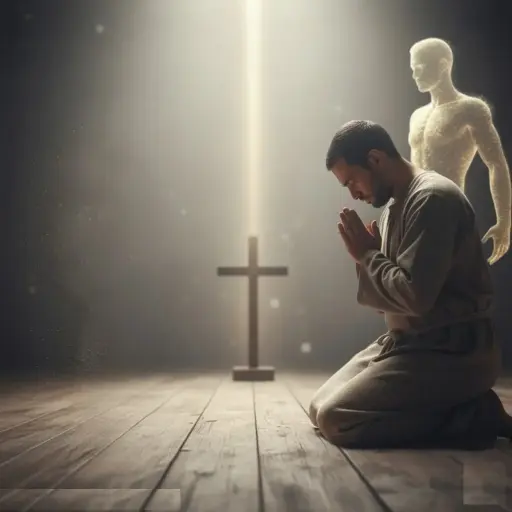
1. The Paradox of Life and Death in Faith
There is a command from God that echoes through the centuries like moral thunder: “You shall not murder.” (Exodus 20:13, NIV)
Simple, direct, non-negotiable. Human life is sacred, a reflection of the Creator. But the same God who forbids man from taking another’s life—or his own—is the God who commands us to put to death what is earthly in us:
“Put to death, therefore, whatever belongs to your earthly nature: sexual immorality, impurity, lust, evil desires and greed, which is idolatry.” (Colossians 3:5, NIV)
How do we reconcile these two voices? One saying “do not kill,” and the other saying “die to yourself”?
Here begins the paradox of faith: God is the God of life, yet He demands that pride, the source of so much spiritual and relational death, must die. Jesus did not come merely to reinforce the law; He fulfilled and deepened it, showing that true murder begins in the heart:
“You have heard that it was said to the people long ago, ‘You shall not murder, and anyone who murders will be subject to judgment.’ But I tell you that anyone who is angry with a brother or sister will be subject to judgment…” (Matthew 5:21-22, NIV)
Anger, pride, envy, contempt, indifference—all these are homicide in seed form. And the ego is the silent killer dwelling in each of us, the root that produces these deadly fruits.
2. The Commandment and the Man Who Wrote It
“You shall not murder” was written by Moses. And Moses, before becoming God’s lawgiver, was a murderer. He killed an Egyptian in an impulse of wisdomless justice (Exodus 2:11-12), trying to free the people by human strength. It was this same man, marked by the blood he shed, whom God called to Sinai to receive the law that would condemn him.
There is a powerful divine irony in this. God chooses the very man who has killed to declare to the world: “do not kill.” It is as if He said, “Now that you know the weight of blood and the power of My forgiveness, you are the one who will warn others.” God often chooses broken instruments to perform holy works, people who have learned through their own skin the meaning of grace.
3. Killing the Body vs. Crucifying the Ego
There is an abyssal distance between taking a physical life and killing pride. The first is a crime against God and man. The second is an essential spiritual command.
Homicide and physical suicide are born from darkness: hatred, revenge, despair, hopelessness, isolation from God. But the “death of the ego” is born from light: from the presence of the Holy Spirit and the painful, yet liberating, awareness that “in me (that is, in my flesh), nothing good dwells” (Romans 7:18, NKJV).
One is death with no return. The other is death that brings life. It is not the body that must die, but the dominion of sin in it. It is not the person who must be destroyed, but the inner throne where the ego sits and declares autonomy from God. This is the most intimate war there is, waged in the soul of anyone who decides to follow Christ.
4. The Ego: The Silent Killer on the Throne
The ego is never satisfied. It wants to be right, to be seen, to be recognized. When contradicted, it reacts; when praised, it inflates. It is the inner tyrant that turns the altar into a stage and worship into self-celebration. It is Moses before the desert: impulsive, self-righteous, confident in his own strength. He kills the Egyptian and thinks he is serving God, but God does not need murderers; He needs broken hearts.
Solomon is another tragic example. He began wise and ended confused—wise enough to write Proverbs, but foolish enough to disobey everything he wrote (1 Kings 11). He built the most glorious temple and, at the end of his life, erected altars to other gods. Ecclesiastes is the diary of one who tasted everything and concluded, “Vanity of vanities! All is vanity.” (Ecclesiastes 1:2, NKJV).
Pride always promises grandeur but delivers ruin. It is the same poison that brought down Lucifer, the voice that whispers, “You will be like God” (Genesis 3:5, NIV). The first step away from God is thinking you don’t need to die to yourself to live in Him.
5. The Cross: Holy Remedy Against the Ego
Jesus showed the opposite path:
“Whoever wants to be my disciple must deny themselves and take up their cross daily and follow me. For whoever wants to save their life will lose it, but whoever loses their life for me will save it.” (Luke 9:23-24, NIV)
Self-denial is a daily death. It is burying the “I” that demands, competes, avenges. Many flee the cross as if it were punishment, but it is a holy remedy: the only one that kills the poison of pride without destroying the vessel. God does not want our suffering; He wants our liberation from the inner tyrant. And this liberation comes when we stop fighting to prove something and start living to serve Someone.
This is what Paul understood:
“I have been crucified with Christ and I no longer live, but Christ lives in me…” (Galatians 2:20, NIV)
The same Paul who once persecuted, now served. The same who breathed threats, now breathed grace. God did not remove Paul’s past – He redirected it through His operative grace. He did not kill his ego by his own strength—he was crucified with Christ. No one can crucify themselves alone; you might pick up the hammer, but you can’t reach the last nail. Only Jesus can steady the wood and transform the death of the ego into the resurrection of the spirit.
6. The Paradox of Christ’s Cross and “You Shall Not Kill”
But how do we understand the death of Christ Himself, ordained by God the Father, in light of “You Shall Not Kill”? This is a crucial point. The commandment prohibits murder – the unlawful and unjust taking of life. God, as the sovereign Author of life, holds the prerogative over it.
Jesus’ death was not common murder, although it involved human evil. It was, above all, a voluntary and atoning sacrifice, planned by God from eternity to pay the price for sin (Isaiah 53:10, Acts 2:23). Jesus Himself said:
“No one takes it [life] from me, but I lay it down of my own accord. I have authority to lay it down and authority to take it up again. This command I received from my Father.” (John 10:18, NIV)
God did not “kill” Jesus in the sense of committing an unlawful act. He gave His only Son (John 3:16) in a supreme act of love and justice, so that the penalty for sin would be paid and we could have life. The cross does not violate “You Shall Not Kill”; it fulfills its deepest intention, as it is the divine remedy against the root of all murder: sin and the ego that fuels it. By dying, Christ destroyed hostility (Ephesians 2:16) and made possible our death to sin.
7. Dying Daily: The Continuous Battle
The death of the ego is not a one-time event, but a continuous process. Jesus said, “take up their cross daily.” Today the nail is wounded pride. Tomorrow it is vanity seeking applause. The day after, fear of what others think. Even after being “dead,” the ego tries to resurrect in the form of offense, dispute, the need to be right. That is why Paul stated, “I die every day.” (1 Corinthians 15:31, NIV). He knew that pride is the last gasp of the old self and must be continually submitted.
8. Practical Application: How to Crucify the Ego with Christ
How do we live out this daily death in practice?
- Recognize the Ego in Action: Ask the Holy Spirit to show you where pride, self-pity, the need for control, or the quest for recognition are operating in your reactions and decisions.
- Confess and Renounce: Bring these manifestations of the ego to the cross in confession. Renounce the right to defend yourself, to have the last word, to seek revenge or self-validation.
- Submit to God’s Will: Replace “I want” with “Your will be done.” This involves obedience to the Word, even when it contradicts your desires.
- Clothe Yourself with Humility: Seek to serve others without expecting anything in return. Consider others better than yourselves (Philippians 2:3). Practice forgiveness.
- Rest in Grace: Remember that this crucifixion is not done in your own strength, but by the power of Christ living in you. Grace not only forgives but empowers you to die to ‘self’.
Conclusion: The Only Death that Brings Eternal Life
“You shall not murder” is God’s voice protecting physical life. “Die to yourself” is God’s voice saving the soul.
Whoever unlawfully destroys the body affronts the Creator; Whoever crucifies their own pride in Christ honors the Redeemer.
Moses killed a man and was forgiven and used. Paul consented to Stephen’s death and was transformed. Solomon, in his pride, nearly killed his own wisdom but left a testimony of repentance. But only Jesus died the death that delivers us from eternal death, rising again to teach us what it truly means to die to sin and live for God.
To kill the ego daily is to allow Christ to live fully in us. And living this way is the only way to never die again.
And so, between the commandment that protects and the cross that transforms, we understand the mystery of true life.
Proverbial Closing
Do not kill the body God created; but crucify the inner throne that usurped God’s place in you.